
Making Household Responsibilities Easier: Practical Ways to Build Confidence at Home
For people living with disability, managing these responsibilities may sometimes require additional planning, practical guidance, or ongoing support. The goal is not simply to keep a home tidy. Developing confidence with household responsibilities can also contribute to greater independence, routine, and control over everyday life.
At Truecare Support Services, we believe household skills should be developed in a way that reflects each person’s abilities, preferences, and goals. With the right approach, everyday household activities can become opportunities to learn, practise skills, and build confidence.
Why Household Responsibilities Matter
Household tasks are an important part of everyday living. They help create a comfortable environment while providing opportunities to practise planning, decision-making, time management, and problem-solving.
Completing these activities regularly can also create a stronger sense of ownership and independence. Something as simple as deciding when to do the laundry or planning what groceries are needed for the week involves several useful skills.
For someone working towards greater independence, these everyday experiences can be just as valuable as learning a more complex skill.
Start by Creating a Simple Plan
When several household tasks are left until the same day, they can feel overwhelming. Creating a simple weekly plan can make responsibilities easier to understand and manage.
Instead of thinking about cleaning the entire home at once, individual tasks can be spread across the week. Laundry might be planned for one day, shopping for another, while smaller cleaning tasks can be completed regularly.
A flexible plan also makes it easier to adjust when appointments, social activities, or unexpected changes occur. The purpose of a routine is to make life easier, not to create another source of pressure.
Breaking Tasks into Smaller Steps
Some household activities may look simple but actually involve several stages. Breaking them into smaller steps can make them easier to approach.
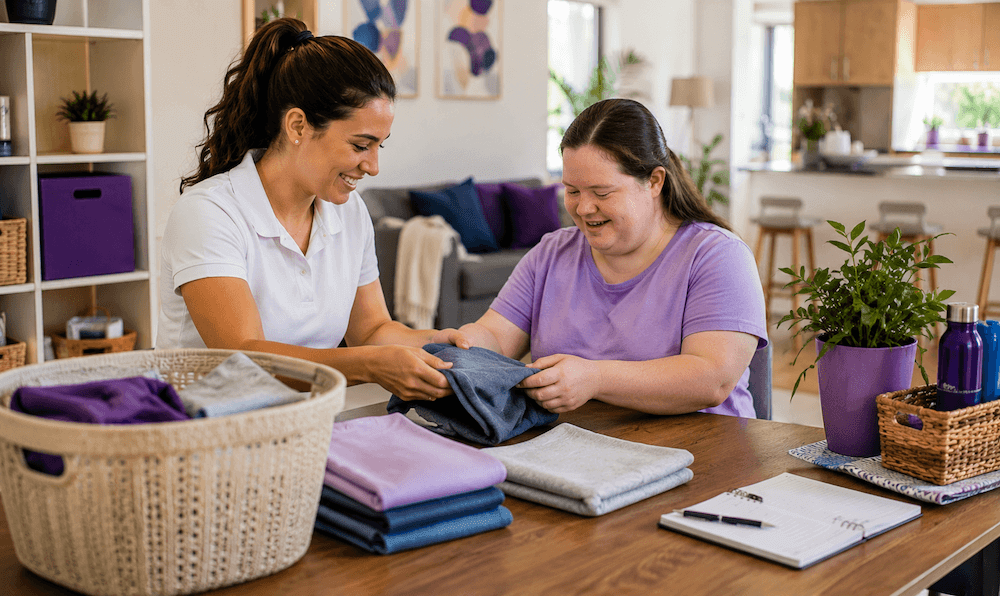
For example, doing laundry involves sorting clothes, checking the washing instructions, operating the machine, drying the clothes, folding them, and putting everything away.
Learning each part gradually can help a person become more comfortable with the complete task. The same approach can be used for cooking, grocery shopping, cleaning, and organising household items.
With regular practice, tasks that initially require significant guidance can become more familiar and manageable.
Keeping the Home Organised
An organised home can make everyday routines easier. When commonly used items have a consistent place, it becomes easier to find what is needed without unnecessary searching.
Simple organisational habits can include:
- Putting items away after use.
- Keeping frequently used supplies within easy reach.
- Checking household items before they run out.
- Keeping commonly used areas clear and organised.
- Creating consistent places for everyday belongings.
These habits may seem small, but they can reduce unnecessary stress and help create a more predictable living environment.
Planning Meals and Groceries
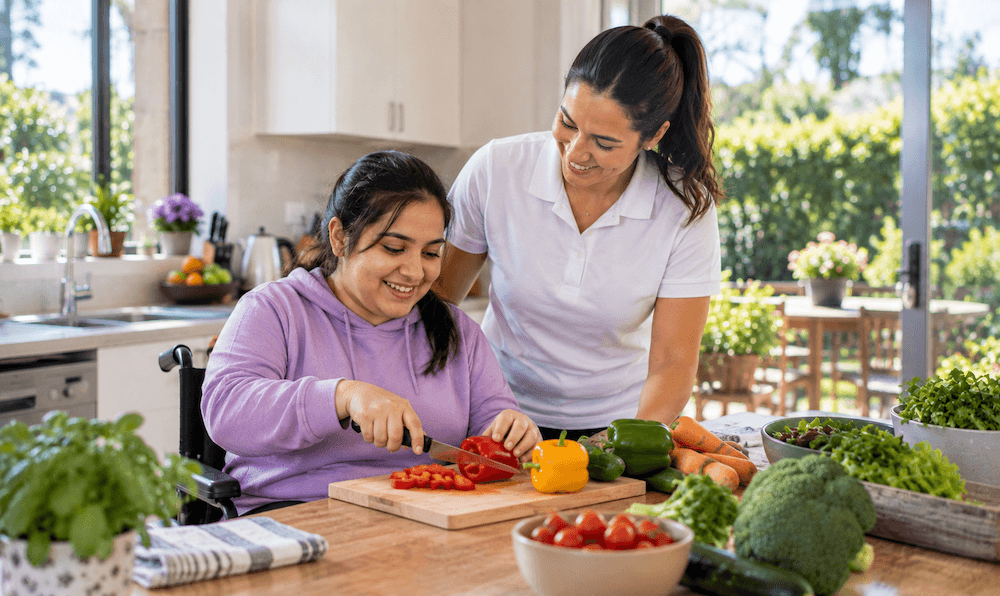
Meal planning is another everyday activity that can support independence. Knowing what meals are planned for the week can make grocery shopping more straightforward and reduce the likelihood of forgetting important ingredients.
Planning doesn’t have to involve complicated recipes. A few familiar meals can provide a useful starting point, with new recipes introduced gradually as confidence grows.
Grocery shopping can also become an opportunity to practise budgeting, reading labels, making choices, and planning ahead.
For participants developing broader daily living skills, these practical experiences can complement other activities focused on building confidence and independence.
Learning to Manage Household Changes
Homes are not always predictable. Appliances can stop working, supplies can run out, visitors may arrive, or a regular routine may need to change.
Learning how to respond to these situations can help develop problem-solving skills and confidence.
Sometimes the most valuable lesson isn’t knowing exactly what to do immediately, but knowing when to ask someone for guidance. Recognising a problem and seeking appropriate assistance is itself an important independent living skill.
Support Should Encourage Independence
Receiving assistance with household responsibilities does not mean giving up independence. Good support should help a person participate in tasks and develop skills wherever possible.
For some individuals, this may mean completing a task independently while receiving occasional guidance. For others, it may involve working alongside a support worker until they become more familiar with the activity.
The level of assistance can also change over time as confidence and ability develop.
Our Assistance with Household Tasks support can help participants manage everyday household responsibilities while encouraging practical participation and greater confidence at home.
Participants who are also working on broader independent living goals may benefit from our Development of Daily Living and Life Skills support, where everyday activities can become part of a wider skills-building approach.
Building Confidence Through Consistency
Confidence often comes from repetition. Completing the same household task regularly allows a person to become familiar with the steps, recognise what works, and gradually become more comfortable doing it.
There may be days when a task feels easier and other days when additional assistance is needed. That’s a normal part of developing independence.
Progress should be measured by the skills and confidence gained over time rather than expecting every task to be completed perfectly.
A More Confident Approach to Everyday Living
Household responsibilities are part of everyday life, but they can also provide valuable opportunities for personal development. Planning meals, organising belongings, doing laundry, maintaining a living space, and managing shopping all contribute to practical independence.
With realistic routines, appropriate guidance, and opportunities to practise, participants can gradually become more confident in managing their home environment.
At Truecare Support Services, we focus on support that works alongside each participant rather than taking away their opportunity to participate. Our approach is centred around individual goals, dignity, choice, and building practical confidence for everyday life.
Small household tasks can become meaningful steps towards greater independence, one routine at a time.
Your Journey, Our Care
Featured posts